Paul Gilbert, VP Cybersecurity Enterprise
Artificial intelligence is transforming healthcare and insurance. It is improving diagnostics, accelerating claims processing, and enhancing customer engagement. But the same technology driving innovation is also powering a surge in AI deepfake fraud.
We are witnessing identity manipulation at a scale and sophistication that traditional controls were never designed to handle. AI deepfake fraud is not simply a financial nuisance. It erodes trust, disrupts care delivery, and creates systemic risk across organisations that handle sensitive personal data every day.
The scale and sophistication of AI deepfake fraud
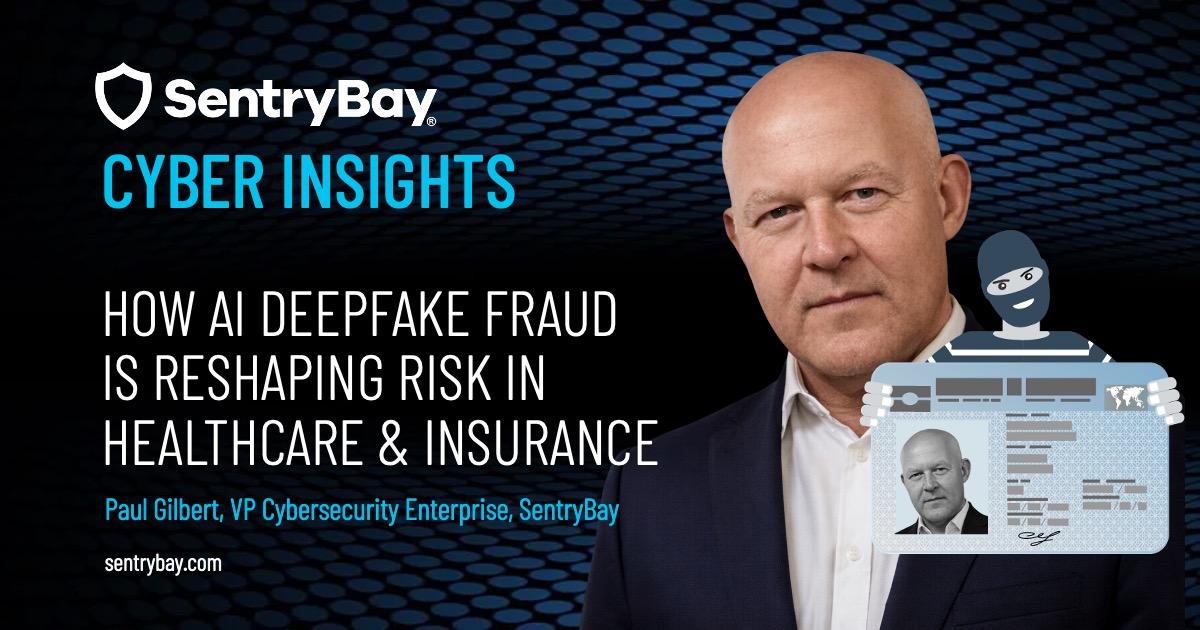
AI deepfake fraud refers to the use of artificial intelligence to execute identity theft, impersonation, phishing, and synthetic identity schemes. Unlike traditional fraud, which often required manual effort and time, AI enables automation, realism, and scale.
Fraudsters can now generate convincing fake documents in seconds. They can clone voices with minimal audio samples. They can manipulate video feeds to impersonate executives, claims handlers, or patients. Identity verification processes that once felt robust can be bypassed with synthetic media that appears authentic.
Recent research indicates that AI driven fraud represents “42.5% of all detected fraud attempts in the financial and payments sector, marking a critical turning point for cybersecurity in the financial industry. Furthermore, it is estimated that 29% of those attempts are considered successful.” What was once considered advanced technology is now widely accessible to criminal actors.
AI deepfake fraud is accelerating faster than many governance frameworks can adapt.
Why healthcare and insurance are prime targets
Healthcare and insurance organisations are navigating rapid digital transformation. Claims are processed online. Patient records are digitised. Telehealth has become mainstream. Identity verification increasingly happens remotely.
These advances improve efficiency, but they also expand the attack surface.
Patient records carry immense value. Insurance claims involve direct financial transfer. Fraudsters understand that compromising identity in these sectors can unlock both financial gain and sensitive data.
AI deepfake fraud in these environments can take many forms. A manipulated video call may impersonate a provider. A cloned voice may request prescription refills or policy changes. Synthetic identities can submit fraudulent claims or open accounts.
Without modern safeguards, such attacks can go undetected. The consequences include financial loss, regulatory scrutiny, reputational damage, and erosion of patient trust.
Deepfake impersonation is the most insidious evolution
Deepfake technology deserves special attention. The ability to convincingly mimic faces and voices changes the nature of fraud.
Imagine a fraudster initiating a video consultation while impersonating a legitimate patient. Consider a scenario where a synthetic voice requests urgent changes to policy details. Picture a fabricated executive message authorising financial transfers.
AI deepfake fraud undermines the core assumption behind many remote verification systems: that what we see and hear is real.
Detection technologies are improving. Organisations are investing in biometric verification, behavioural analytics, and anomaly detection systems. These tools are critical. But they must operate alongside a broader strategy that anticipates manipulation at every layer of interaction.
AI deepfake fraud demands a strategic response
Combating AI deepfake fraud requires more than incremental improvement. It requires a structural rethink of fraud prevention.
Identity verification must become adaptive and risk based. Monitoring must occur in real time, not after the event. Staff and customers must be educated about impersonation tactics. Cross industry collaboration must strengthen shared intelligence.
Fraud prevention is no longer a specialist function confined to compliance teams. It is a board level risk conversation. The operational resilience of healthcare and insurance organisations depends on it.
The repercussions of failing to act extend beyond financial metrics. When AI deepfake fraud succeeds, patient trust is damaged. Critical services may be delayed. Confidence in institutions weakens.
That is why urgency matters.
Preventing AI deepfake fraud at the endpoint
One often overlooked aspect of AI deepfake fraud is how it begins. Synthetic audio and video require source material. Fraudsters need voice samples, facial imagery, or recorded interactions to train or refine impersonation models.
That is where prevention at the endpoint becomes essential.
At SentryBay, Armored Client for IGEL adds policy driven control over microphone and camera access during authenticated sessions. Devices can be blocked by default and enabled only for approved applications. By limiting unauthorised audio and video capture, organisations reduce the opportunity for malicious actors to harvest the raw material required for deepfake impersonation.
AI deepfake fraud will continue to evolve. But by combining strategic governance, advanced identity controls, and endpoint level prevention, healthcare and insurance organisations can strengthen resilience and protect the trust placed in them every day.
About the Author
Paul Gilbert is Vice President of Cybersecurity Enterprise at SentryBay. He works with healthcare, insurance and financial services organizations to strengthen resilience against emerging threats such as AI deepfake fraud and identity based attacks. Paul specialises in aligning advanced endpoint protection strategies with enterprise risk management, helping organisations protect sensitive data, preserve trust and meet evolving regulatory expectations.